A lot has been going in my world—ending a job I’ve had for nearly a quarter century and starting a new one in the same field—which I should address in a separate post, but I couldn’t let Plastic Free July slip away without acknowledgement. And I also wanted to take a moment to share some relevant good news, because many of us have had more than our share of bad news lately.
Plastic Free July is an annual campaign coordinated by the Plastic Free Foundation to raise awareness of the negative impacts of plastic pollution and to encourage individuals to reduce their consumption of single-use plastics. This matters because plastics are ubiquitous, not just in products, but in our environment and our bodies as contamination. If this is not something you’ve heard about, I encourage you to read my post on the subject from last year to get up to speed.
As always, any products or companies mentioned in this post are for informational purposes only and should not be construed as endorsements by me or any organization I’m associated with through employment or volunteerism.
A Nurdle Hurdle
The extent and potential ramifications of plastic pollution are daunting and upsetting, but as more people become aware of the issue, positive change is happening. Earlier this year, Illinois became the first state in the US to pass legislation to hold plastic manufacturers accountable for spills of the plastic pellets, or “nurdles,” used as feedstock in their processes. At the end of May 2026, the IL Senate passed HB 4418, previously passed by the IL House, and the legislation has been sent to Governor Pritzker for signature.
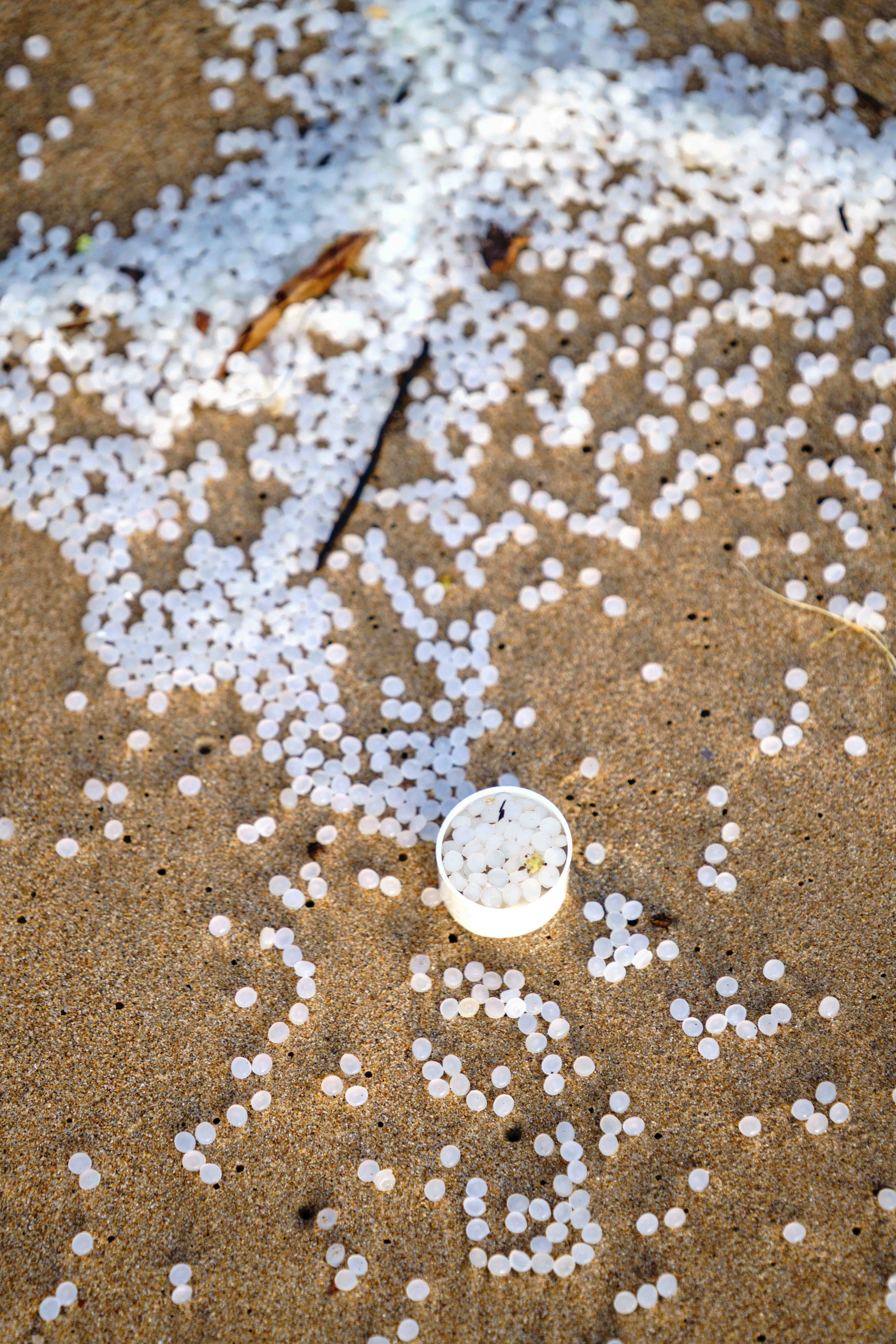
Nurdles are little pellets of specific plastic resins (PET, HDPE, etc.) that are typically produced from petroleum products, though sometimes they might be made from recycled plastics. These little building blocks are shipped all over the world to manufacturing facilities where they will be melted, mixed with various chemicals to foster properties like flexibility, durability, color, etc., and then molded or extruded to create a myriad of products like bottles and other packaging, toys, electronics cases/housing, patio chairs, etc. Because they’re small and lightweight, it makes sense to ship plastics this way. But it’s because they’re so small and lightweight that pollution happens so easily—these little blobs are easily spilled, either during their manufacture (they often enter the environment via stormwater runoff at industrial facilities), or during transport to facilities where they’ll be made into other things (think of them escaping as they’re loaded on trains, trucks, or ships). Once they’re in the environment, like all bits of litter, they eventually end up in waterways. Fish and other wildlife easily mistake them for food and may ingest them. If animals ingest too much plastic, they might starve as their digestive systems fill with this synthetic material, leaving no room to process real food. Otherwise, like all plastic pollution, once nurdles are exposed to the elements, they can leach harmful chemical additives into the environment and will slowly break down into tinier pieces, until they become micro- and nanoplastics, at which point they are even more likely to invade the bodies of humans and other animals. According to the Waterkeeper Alliance, an estimated 10 trillion plastic pellets enter our oceans each year. Plastic pellets are such a common form of plastic pollution that every May, volunteers around the world participate in the International Plastic Pellet Count, a month-long search for and documentation of plastic pellets in and around riverbanks, lake shores, and beaches. You can read more about the annual pellet count on the US PIRG website, and on the Waterkeeper Alliance site, which reports that during May 2026’s count more than one million plastic pellets were documented in waterways around the world. Earlier this year, environmental activist Diane Wilson went on a hunger strike to call attention to nurdle pollution from Dow Chemical’s facility in Seadrift, TX, and an 11-mile-long spill of polystyrene nurdles occurred in Michigan when a semitrailer skidded off the road near the south end of the I-196 bridge over the Kalamazoo River during heavy snowfall and icy conditions. Earlier today, the BBC reported on cleanup efforts tied to a massive nurdle spill caused by a ship collision in the Port of Tyne on July 19. Nurdle spills are all too common.
HB 4418, aka the Plastic Pellets Pollution Control bill, amends the Illinois Environmental Protection Act, and directs the Illinois Environmental Protection Agency (IEPA) to develop and implement pollution controls that specifically target plastic pellets. Plastic manufacturers would be required to have a plan to keep nurdles out of the environment as part of their stormwater permits. Similar legislation has been proposed at the US federal level. There are already technologies to help contain and prevent plastic pellet spills, as illustrated in this site by Ultratech International Inc. (which is informative, though clearly pitching their products).
Such legislation won’t prevent all nurdle spills, of course. The semitrailer spill in MI and the ship collision-related spill in the Port of Tyne wouldn’t be avoided through tighter controls at industrial facilities. But every step we take to reduce plastic pollution matters, so let’s celebrate the win!
Plastic Reduction
Of course, the best way to prevent pollution is to avoid creating it in the first place. In this context, that means reducing the production of unnecessary plastics, and as consumers, we help make that happen by reducing demand for plastic products and by letting manufacturers know that we want less plastic in products and their packaging. For inspiration, check out the Plastic Free July website for tips to reduce your use of plastics and see the ideas presented in this NRDC article outlining 10 ways to reduce plastic pollution.
How are you working to reduce plastic use in your home, office, or school? Share your strategies in the comments and keep up the good work! Every change you make, no matter how small it seems, can make a difference.
 Joy-S-ness